
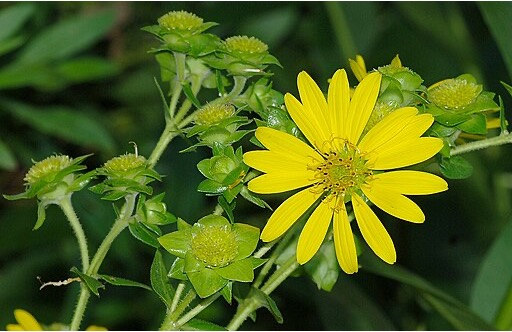
Description
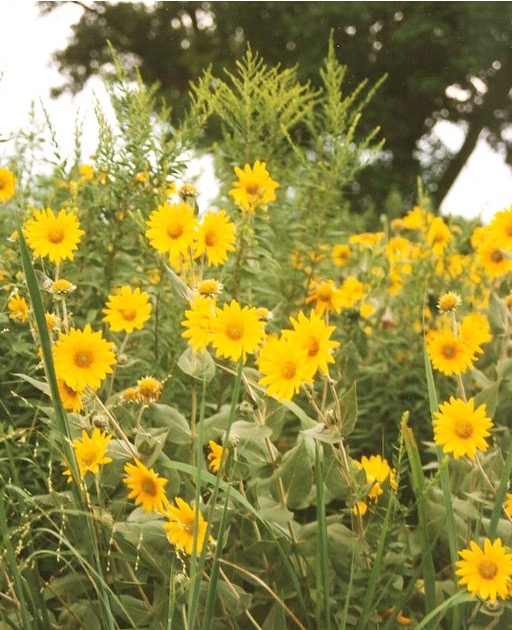 Scientific name: Silphium integrifolium
Range: Southern Michigan, Wisconsin
Soil: Loam, sand, clay
Moisture: Medium-wet, medium, medium-dry, dry
Benefits: Pollinators and birds, deer-resistant
Height: 4-5′
Blooms: July-Sept.
Color: Yellow
Spacing: 2-4′
Root: Taproot and small rhizomes
Before flowering, Rosin Weed can be mistaken for milkweed. While flowering, it resembles a sunflower. Unlike its statuesque cousins cup plant and compass plant, it doesn’t reach towering heights, so it may be the best Silphium for a garden setting. It also matures faster and stays upright with little to no surrounding support. It is aggressive though, so choose a spot where it can’t overwhelm. It also handles drought with ease, so it’s unlike to wilt, as cup plant will in the heat. Rosin Weed attracts a variety of pollinators, especially some of our smaller solitary bees. The plant gets its common name from the sticky rosin it produces, which was used as a chewing gum by the Native Americans. Rosin weed is quick to mature once germinated, reaching flowering size surprisingly fast.