Welcome to the ninth annual
Keweenaw Native Plant Symposium
Featuring Heather Holm
Nationally known pollinator conservationist and
award-winning author
Plus
Aaron Anderson of the
Xerces Society for Invertebrate Conservation
and
RJ Laverne of the
Davey Tree Expert Company and
Michigan Technological University
Saturday, April 4, 2026
9 a.m.–Noon
A FREE ZOOM WEBINAR ORIGINATING IN
UPPER MICHIGAN’S KEWEENAW PENINSULA
SPONSORS
WILD ONES KEWEENAW CHAPTER
KEWEENAW LAND TRUST
KEWEENAW INVASIVE SPECIES MANAGEMENT AREA (KISMA)
MICHIGAN STATE UNIVERSITY EXTENSION MASTER GARDENERS
Join us for a morning of fun and inspiring talks on the fascinating world of native plants and the wildlife that depend on them!
Registration is free. After registering, you will receive an email with a link to the webinar. A reminder will be sent shortly before the symposium.
9 a.m.—RJ Laverne
“The Right Tree in the Right Place”
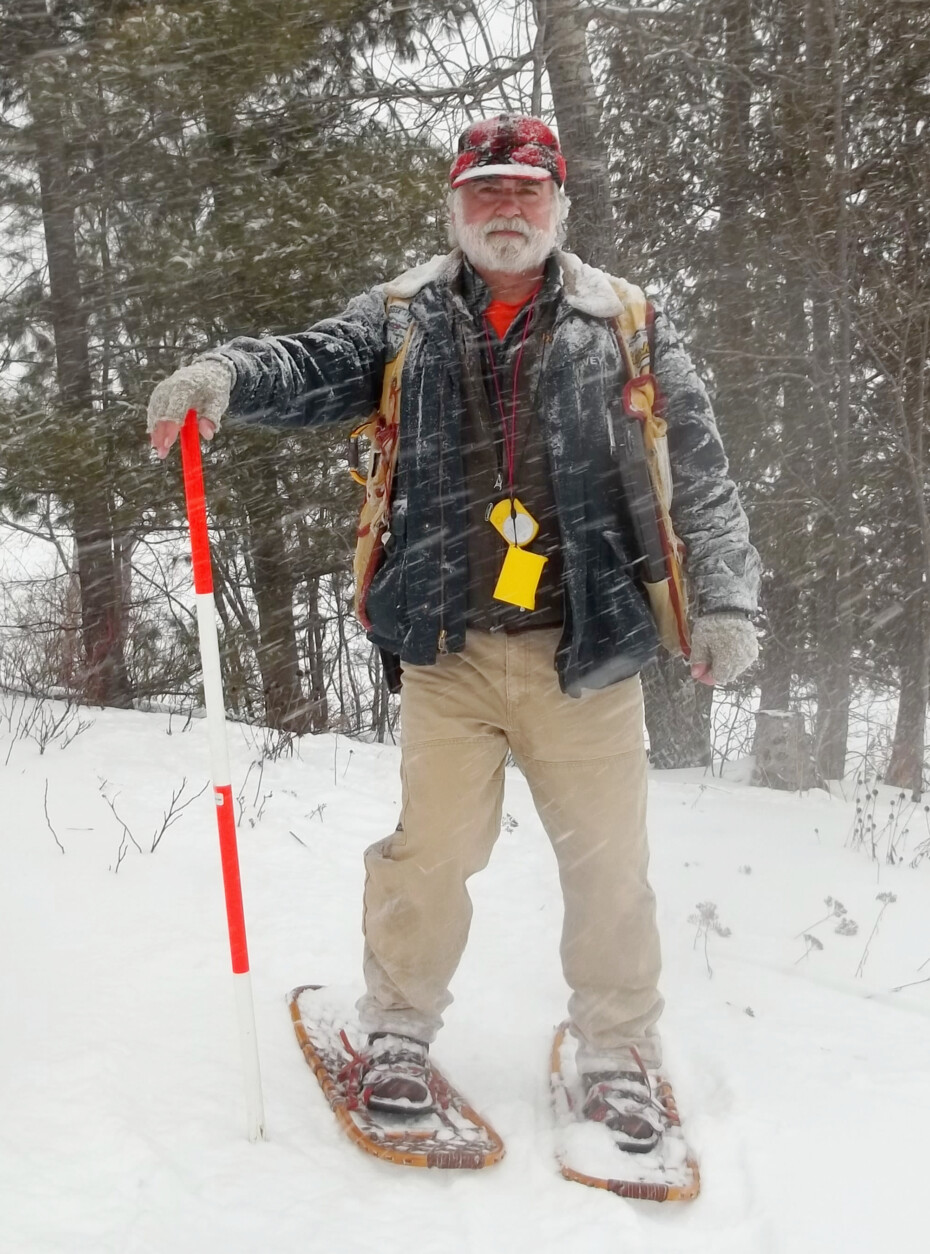
If you’ve ever fallen for that perfect nursery-grown tree and then watched helplessly as it broke down under record snows, this is the talk for you. Master arborist RJ Laverne will guide us on matching the right tree with the right site–and the right climate.
Choosing the right tree and planting it in its happy place means you’ll have many more years together, and you’ll need to spend much less of that time on winter protection.
About RJ
RJ Laverne is manager of education and training for The Davey Tree Expert Company, including Davey’s flagship training program, Davey Institute of Tree Sciences. He is also an adjunct associate professor of urban forestry at Michigan Technological University.
RJ began his career with Davey in 1997 as a consulting arborist and project manager for urban forestry clients. He is an International Society of Arboriculture Board Certified Master Arborist, a Registered Consulting Arborist, and a member of the American Society of Consulting Arborists Board of Directors.
RJ received a BS in Biology and an MS in Remote Sensing from the University of Michigan and a BS in Forestry from Michigan Tech. He earned his PhD in Urban Studies and Public Affairs at Cleveland State University.
Additionally, RJ has conducted research on soundscape ecology and how the devastation from emerald ash borer effects urban sounds. Currently, he is investigating the relationship between trees and mycorrhizal fungi.
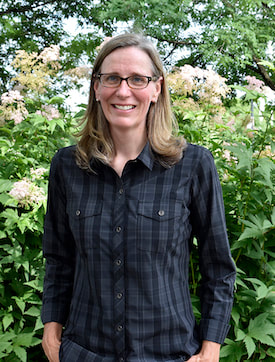
10 a.m.—Featured Speaker: Heather Holm
“From Canopy to Ground Layer: Building Soft Landings with Keystone Plants for Pollinators”
This presentation explores the powerful connection between keystone plants and the insects that depend on them. You’ll learn how to implement “Soft Landings” in landscapes of all scales from home gardens to larger managed sites. This innovative habitat design and management strategy focuses on creating mini-ecosystems beneath native trees to support pollinators throughout their life cycles. Participants will learn what defines a pollen specialist, discover examples of these fascinating bee-plant relationships, and understand how keystone plants function as foundational species in our ecosystems.
You’ll benefit from practical strategies on site preparation methods, herbicide considerations, and building a resilient plant matrix of sedges, cool-season grasses, and flowering keystone species. By the end of the presentation, participants will be equipped to design and install a Soft Landings planting that transforms conventional landscapes into thriving sanctuaries for bees, caterpillars, and other beneficial insects.
About Heather
Heather Holm is a pollinator conservationist and award-winning author of four books: Pollinators of Native Plants (2014), Bees (2017), Wasps (2021), and Common Native Bees of the Eastern United States (2022). Both Bees and Wasps have won multiple book awards including the American Horticultural Society Book Award (2018 and 2022 respectively). She is the founder and chair of Minnesota Native Bees, an online field guide illustrating the native bees of Minnesota and beyond. Heather’s expertise includes the interactions between native pollinators and native plants, and the natural history and biology of native bees and predatory wasps. Her work has been featured in the New York Times, Minneapolis Star Tribune, and many local publications. Heather is also an accomplished photographer and her pollinator photos are frequently featured in print and electronic publications.
Heather serves on the boards of the following non-profits: Friends of Cullen Nature Preserve and Bird Sanctuary, Friends of Minnetonka Parks, and the new Minnesota Oak Savanna Chapter of The Prairie Enthusiasts. In her spare time, she is an active community supporter, writing grants, and coordinating and participating in volunteer ecological landscape restoration projects of fire-dependent ecosystems. The latest project is a 13-acre oak savanna restoration that will provide thriving habitat for pollinators, birds, mammals, and passive, nature-based opportunities for people.
11 a.m.—Aaron Anderson
“Protecting Pollinators from Pesticides, Promoting Natural Enemies at Home”
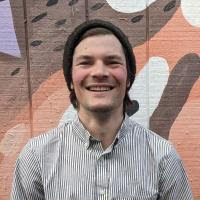
Creating habitat for pollinators at home is a simple and effective way we can all help conserve these essential creatures. But, habitat needs to be protected from pesticides in order to keep pollinators and other invertebrates healthy. How can we do this in our yards and residential landscapes? In this talk, we’ll talk about how to provide resources for natural enemies, important creatures that help keep pest insects in check. We’ll also talk about the risks that residential mosquito sprays pose to pollinators, and ecologically friendly mosquito management alternatives.
About Aaron
Aaron Anderson works with the public and the staff of the Xerces Society for Invertebrate Conservation to reduce pesticide use in residential landscapes and promote alternative pest control measures and pollinator-friendly gardening practices. Prior to joining Xerces in 2022, he researched pollinator conservation in urban landscapes, restored habitat for several endangered butterfly species, and worked in insect biocontrol. Aaron has a PhD from Oregon State University.