The Most Important State Agency You’ve Never Heard Of
Think Extension Service, and county fairs, Master Gardener programs, and home canning advice may come to mind. Add to that list the Michigan Natural Features Inventory, which tracks some of our state’s most valuable natural treasures.
MNFI’s director, Michael Monfils, is giving a talk on his agency’s efforts to conserve Michigan’s native species and natural communities.
- Date: Tuesday, November 10, 2026
- Time: 6 p.m.
- Where: Zoom. Register to receive a link to the talk
Everyone is invited to register for Mike’s talk and learn about MNFI’s many activities. In addition, he will describe ways the public can contribute by gathering and sharing information for various conservation initiatives.
WOK Supports “Save the Sibley Prairie”
The WOK Board of Directors has voted to donate $500 to the Save the Sibley Prairie Coaltion.
The 440-acre Sibley Prairie, located 15 miles from Detroit, is a gem of biodiversity. This rare ecological oasis is the largest remaining lakeplain prairie in the whole of Michigan, a landscape found almost nowhere else on earth. Prairies like this once covered vast areas, but today almost all are gone. The Michigan Land Conservancy describes the Sibley Prairie as “the most important conservation opportunity in Michigan today.”
These 440 acres were scheduled for auction in August 2025. At the last moment, with development looming, the Michigan Land Conservancy secured an option to purchase the property backed by a lender. Preserving Sibley Prairie will create critical public access and maintain key ecological services that mitigate effects of industrialization, urbanization, and climate change.
Reining in the Rain
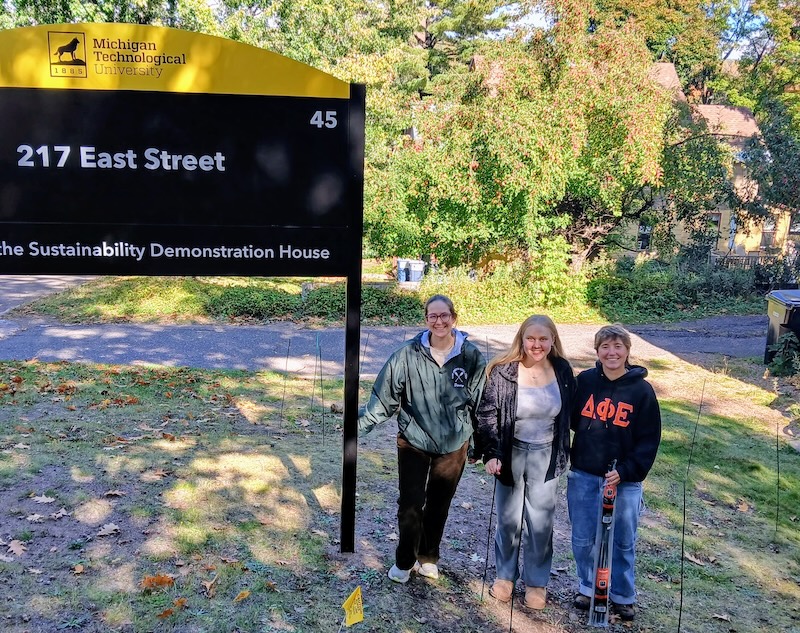
Residents of the Sustainability Demonstration House have been roughing out the borders of a rain garden at its new location on East Street, in Houghton. When completed, the garden will mitigate erosion in the front yard by trapping stormwater runoff from Seventh Avenue.
Keweenaw Wild Ones is providing plants and guidance for the project, which is also supported by Michigan Tech’s Office of Sustainability and Resilience.
Pictured, left to right, are Zoe Mazurkiewicz, Meredith Makowski, and Evi Kekoua.
Plants in the Ground at Creekside Bike Park
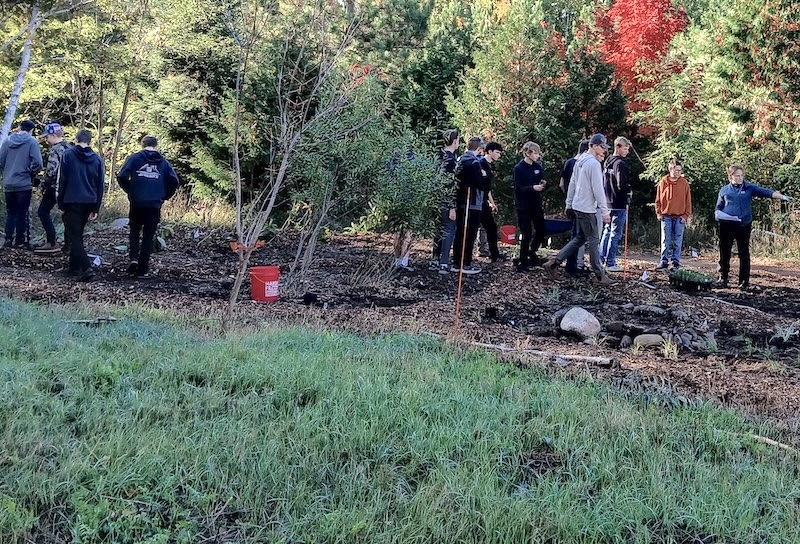
Roz Heidtke, right, directs students planting natives at Keweenaw Wild Ones’ newest spoonsored garden.
Hancock High students picked up where they left off last spring and planted hundreds of natives October 7 at Creekside Bike Park.
The project began in May, when Leanne Laaskonen’s sophomore biology classes prepared the site as part of a unit on native plants. They worked under the direction of WOK member Roz Heidtke, who is spearheading the project on behalf of the Hancock Bike Club. Then, students laid down cardboard and spread wood chips and compost to prepare the site, which is part of the Maasto Hiito trail system in Hancock.
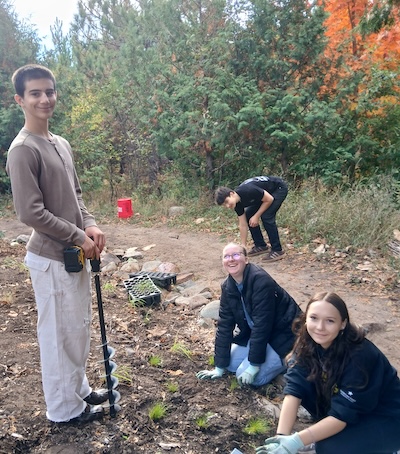
This fall, Leanne recruited those same students to finish the job. Now juniors, they were excused from their regular classes to make new paths and plant multiple flats of native grasses, flowers, and sedges. Michigan Tech graduate student Connor Ford, who recently joined WOK, helped supervise.
Funding for the project was provided by the Wildflower Association of Michigan and a GroMoreGood Grassroots Grant, courtesy of The Scott Miracle-Gro Foundation and KidsGardening.
Making a Difference at the Labyrinthe
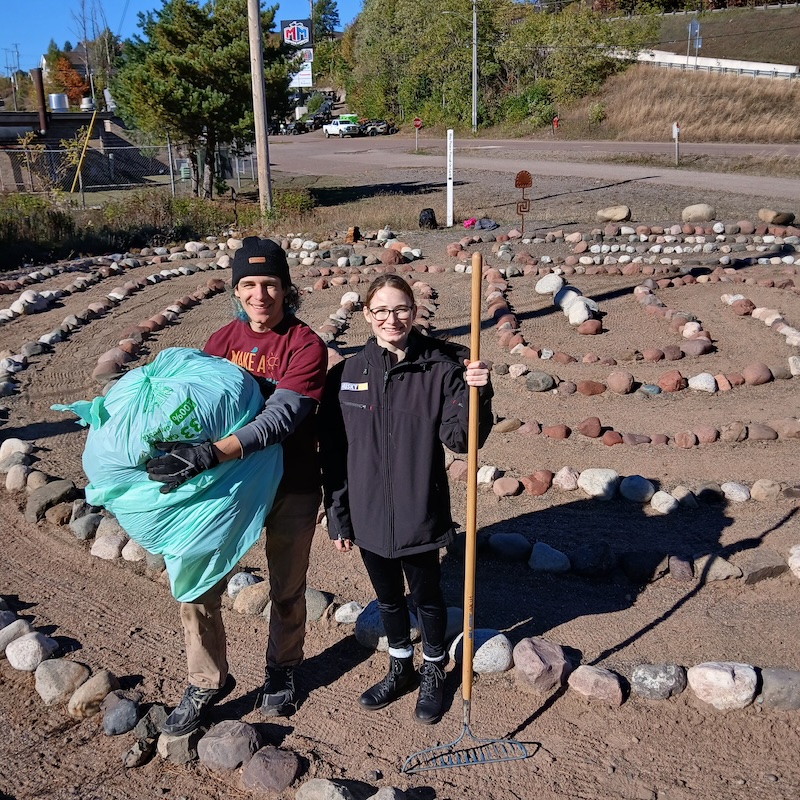
Michigan Tech undergrads Liam Girard and Bella Farrell weeded, raked, and pruned for more than four hours October 17 to tidy up Hancock’s labyrinthe.
The duo volunteered for the project during MTU’s Make a Difference Day, when students fan out into the community to tackle worthwhile initiatives and generally make the world a better place.
WOK member Allyson Jabusch cares for the labyrinthe. The winding path attracts visitors from the nearby hotel, who enjoy its meditative rambles. However, keeping the path free of weeds has proven to be a sisyphean task.
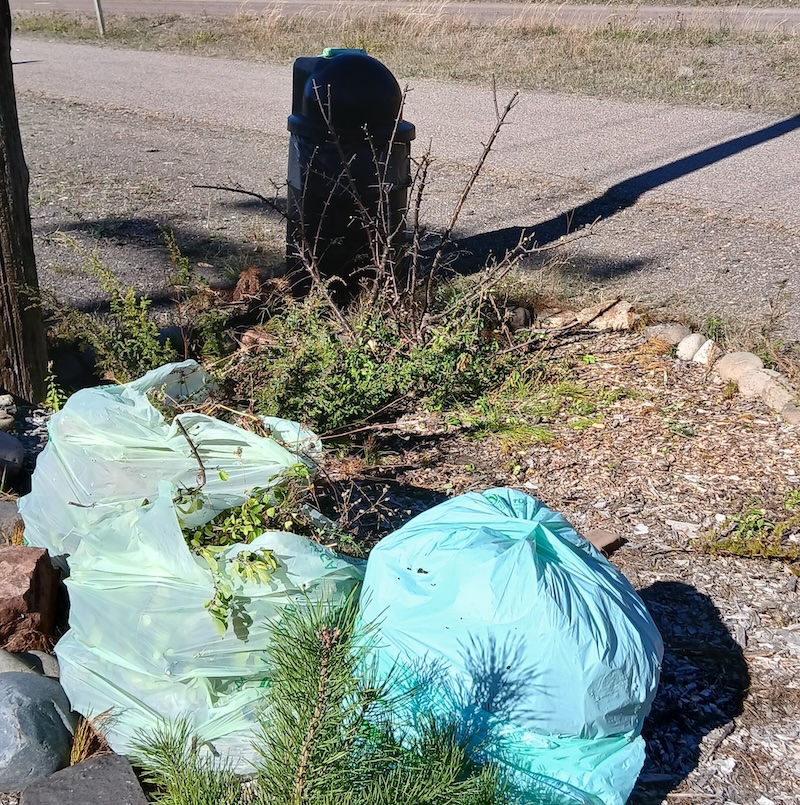
Liam and Bella launched a tenacious attack on the overgrowth, gathering two full bags of weeds. In addition, they pruned back an invasive buckthorn bush (pictured left, behind the bags) at the site, stashing its berries within another sack so they wouldn’t germinate and form the foundation of the next buckthorn generation.
Canterbury House Garden Is Thriving
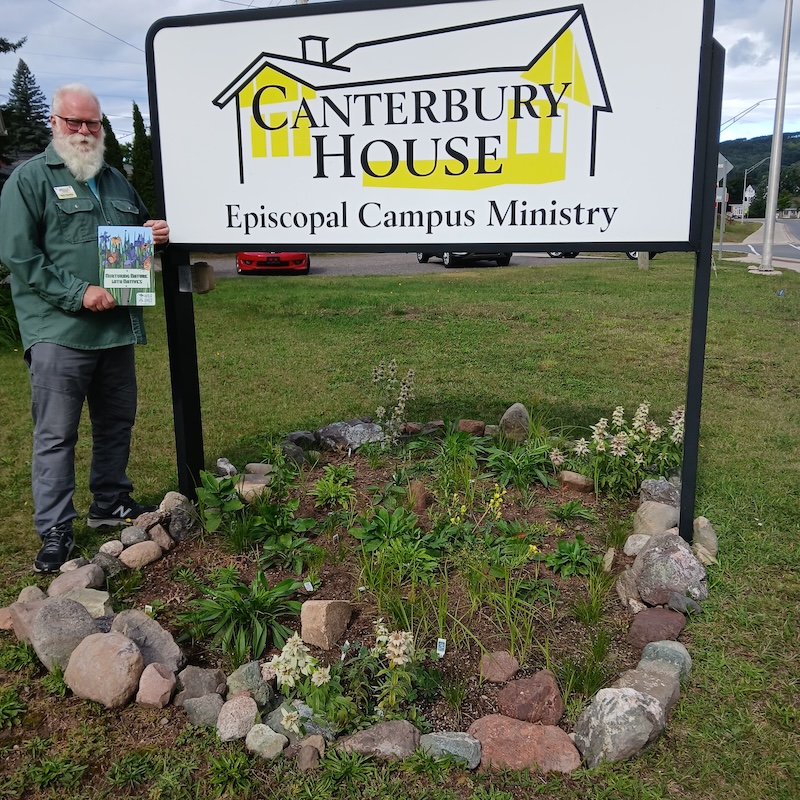
After a mere three months in the ground, the garden WOK awarded to Canterbury House has dashed through the “sleep” and “creep” stages of native plant development. Instead, it has charged full-blown into “leap,” with some plants bursting with blooms their first summer.
Canterbury House, which is affiliated with the Episcopal Church, works to create a welcoming place where international students and their spouses can get help improving their conversational English, reading, and writing skills. The Canterbury House Staff also provides support services to students and the local community.
Missioner and chaplain Rick Stanitis holds the Keweenaw Wild Ones garden sign included with the garden, a selection of plants for sandy soils purchased from U.P. Native Plants, of Marquette.