Welcome to Keweenaw Wild Ones Native Plant Sale!
Our sale is over for the season. It’s time to dream about what to plant next spring.
See you in 2027!
Plant Your Own Pollinator Paradise
Create a wildlife oasis in your yard! The Wild Ones Keweenaw chapter is holding its mid-summer sale. We are offering a selection of native plants to get you gardening for butterflies, birds, and pollinators.
Check out the plants below and think about what you’d like in your garden. Then visit our shop. Sales tax is included in the price.
/
How to order
- Go to our shop and pick out your plants.
- Check out. You may select PayPal or “pay on delivery,” i.e., pay when you pick up.
- When your order is complete, you will receive an email suggesting times you can pick up your plants.
After making an appointment, pick up your order at
1284 Hickory Lane, Houghton.
Our plant sales are online, but we are not Amazon. If you have trouble checking out, email your order to [email protected].
Love native plants? Want to take advantage of pre-sales and get a discount? Join the Wild Ones Keweenaw chapter! Sign up here!
Questions? Email [email protected]
Read about these fascinating plants, then visit our shop.
Looking for something not listed? Come back later; we are nurturing many other species that will be big enough to sell later this summer.
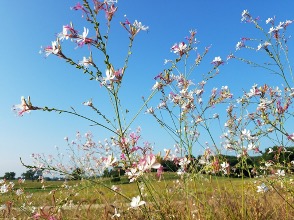
Biennial Gaura
Oenothera gaura
OUT OF STOCK
The delicate flowers of this short-lived denizen of the prairies start out light pink, then turn a vibrant red/pink color in the late summer to early fall. These colors make this statuesque plant attractive to butterflies. Treat it like a black-eyed Susan; it may disappear after two years, but it reseeds readily.
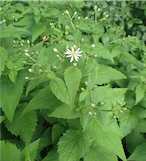
Big-Leaved Aster Eurybia macrophylla
OUT OF STOCK
This is your go-to groundcover for dry shade in the Keweenaw, though it doesn’t mind water at bit. Big-Leaved Asters have large, heart-shaped leaves and blossom in partial shade. The plant is very beneficial to birds: seeds are eaten by song birds in winter, seed fluff provides soft nesting material, Ruffed Grouse and Wild Turkeys eat the seeds and the foliage.
Big-Leaved Asters are a pollinator favorite and attract a wide variety of insects as well as feed the caterpillars of the Silvery Checkerspot and Northern Crescent butterflies. Nectar-collecting pollinators benefit late in the season when few plants are in bloom.
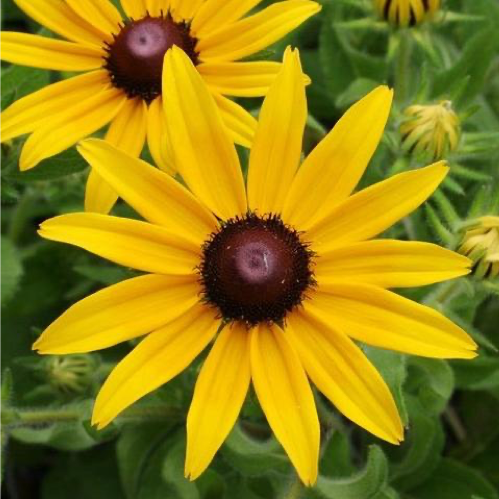
Black-eyed Susan Rudbeckia hirta
This beloved roadside wildflower tolerates nearly all sunny conditions. A biennial or short-lived perennial, it will return year after year if the seeds land in their happy place.
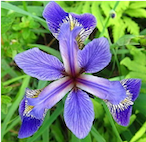
Blue Iris Iris versicolor
SUPPLIES VERY LIMITED
Blue Iris has very showy blue-purple flowers that attract hummingbirds and are beneficial to pollinators. It thrives in wetland habitats in sunny areas that include rain gardens, water gardens, wet meadows, marshes, along shores, in ditches and in swamps, though it will also do well in a tended garden.
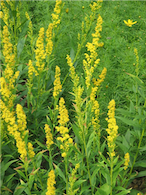
Blue-Stemmed Goldenrod Solidago caesia
Blue-stemmed Goldenrod is one of only two native goldenrods that do well in woodland shade. The other, Zigzag Goldenrod, spreads by rhizomes and is more aggressive. Both are beautiful; take your pick. The “blue” in the name is derived from the stems that may be blue-gray in mature plants. The flowers attract a wide variety of insects; it has been designated as a plant that is of special value to native bees by the Xerces Society for Invertebrate Conservation.
Preferring light shade, Blue-stemmed Goldenrod can be added to open woodland gardens, borders, cottage and/or butterfly gardens. The plant is considered to be deer resistant, although deer may graze on the lower leaves.
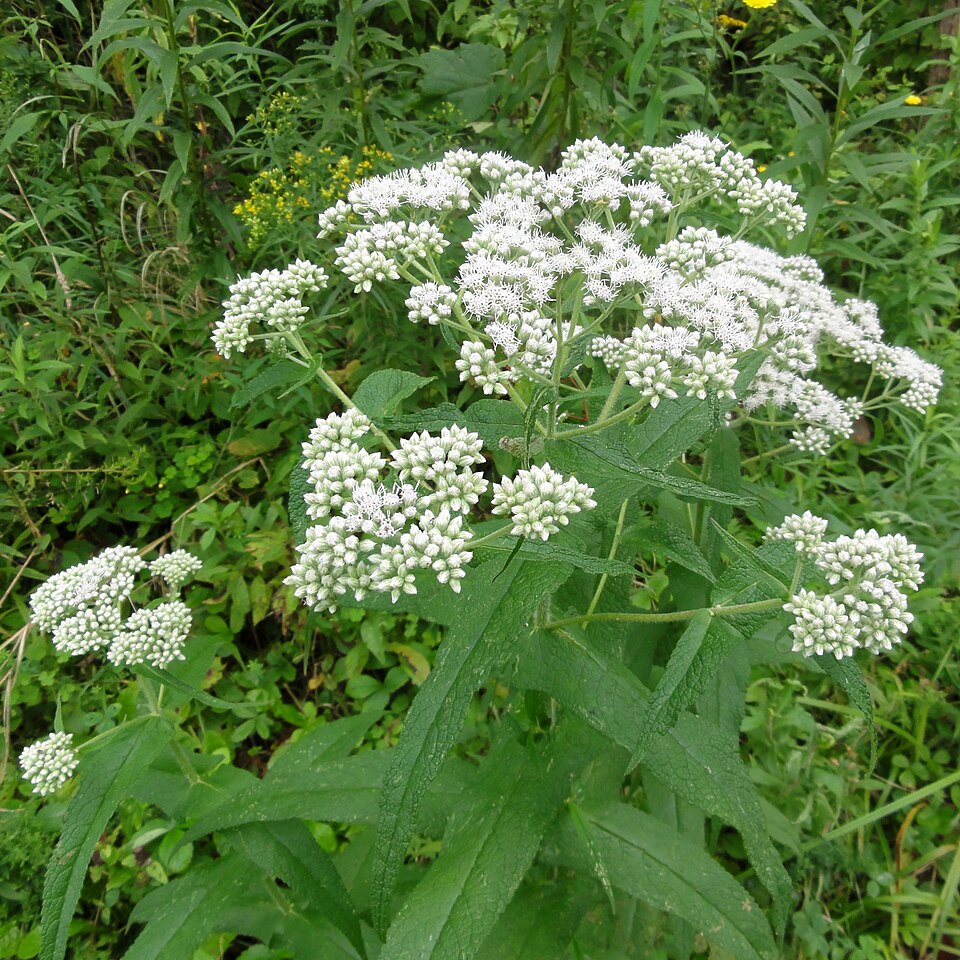
Boneset–New!
Eupatorium perfoliatum
OUT OF STOCK
Boneset offers so much for so little. For the gardener: lovely, airy, white flowers. For pollinators: abundant nectar and pollen. For beneficial insects: an excellent host plant. What more could you ask? Oh yeah, deer give it wide berth. What’s not to love?
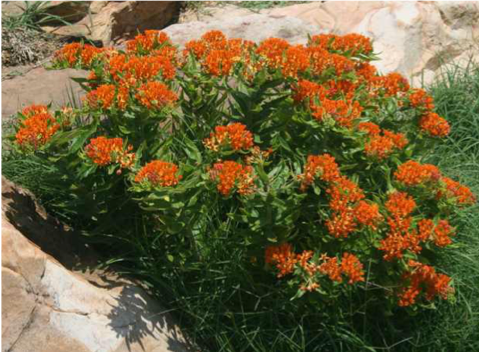
Butterflyweed
Asclepias tuberosa
This dandy plant grows in miserable sandy soil in full sun; once established, it is hardy as stone. And it’s orange. Beloved by pollinators and humans alike, its blooms are regularly bedecked by monarchs. Plant butterflyweed and help keep our favorite butterfly coming back year after year.
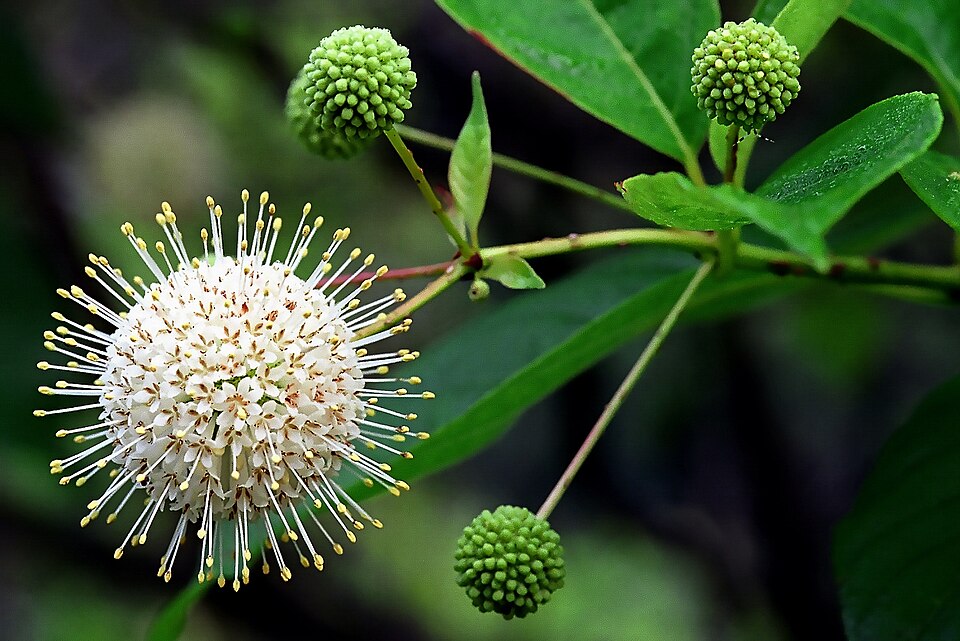
Buttonbush
Cephalantus occidentalis
OUT OF STOCK
If you are searching for a small tree/large shrub that likes wet feet, look no further. Buttonbush loves damp, swampy places. It has an interesting, twisted trunk, open crown and spreading branches. Butterflies and other pollinators are attracted to the long-blooming “button” flowers, and birds enjoy the seeds in the fall.
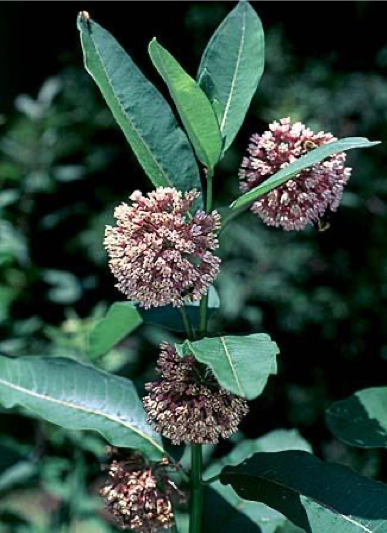
Common Milkweed
Asclepias syriaca
Will grow in nearly all soils, so long as they aren’t too wet. Plant in full to partial sun 1 foot apart. Beloved by butterflies, especially monarchs, which only lay their eggs on milkweed plants. Common milkweed is an aggressive spreader where it is happy, so give this plant some room to run and you won’t be disappointed.
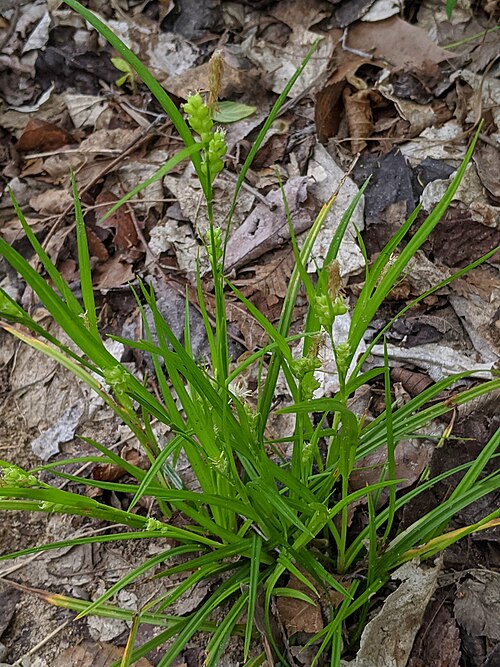
Common Wood Sedge
Carex blanda
Need a filler for shady areas? Carex blanda could be your plant. It’s not fussy about conditions (even full sun is OK) and deer and rabbits seem to find it quite unpalatable. Take advantage of its small stature to tuck it in amongst some forbs and enjoy the contrast.
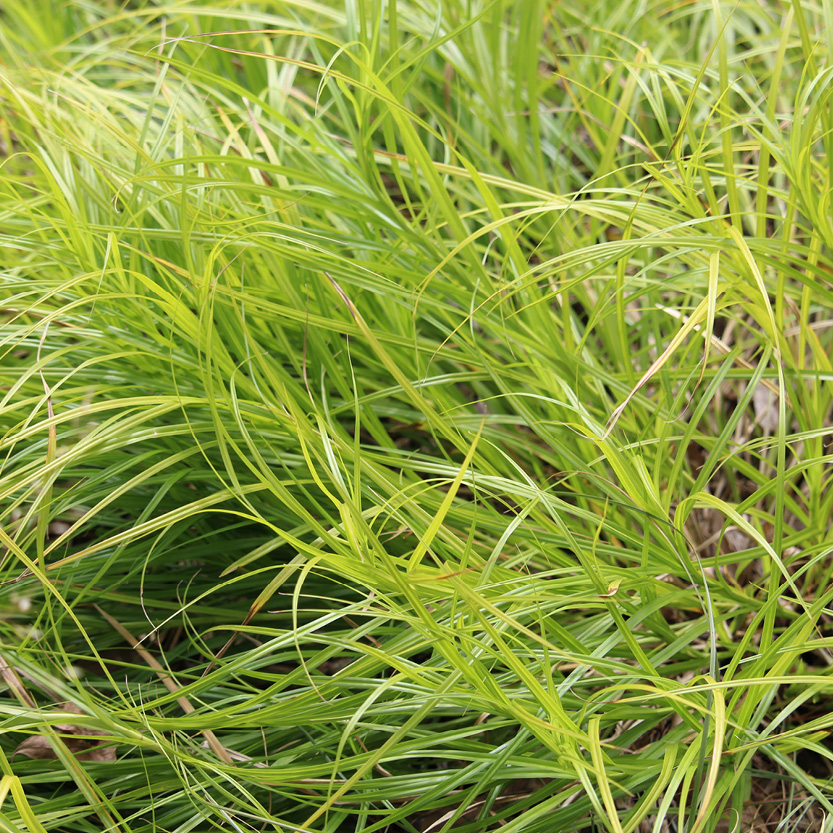
Copper Shouldered Oval Sedge
Carex bicknellii
Adaptable, attractive sedge that tolerates drier conditions. Especially recommended for slopes, bioretention basins, rain gardens and sedge meadows. Does well in full sun to partial shade, and can be compromised if shaded by taller, aggressive plants. Named for the copper-colored seed heads, which are beloved by birds, including sparrows and pheasants.
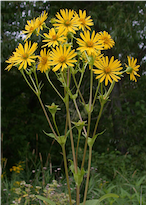
Cup Plant Silphium perfoliatum
OUT OF STOCK
Cup plant (or cupplant) is one impressive creature, maybe too impressive for some tastes, but with such magnificence, we thought, why not let you decide whether you want to chance it or not? Cup plants can get eight or even 10 feet tall and maybe four feet wide, and you bet they reseed themselves. Why grow them? Birds love the seeds. Pollinators and hummers love the cheery yellow flowers. Birds and bugs drink the water that collects where the leaves join the stem (thus “cup plant”). It’s a great screen and a stunning presence in the back of the garden. And of all the plants you grow, cup plant will be the one that causes visitors to do a double take. It does prefer moist soil, and while it droops when it’s dry, it will perk right up after a rain.
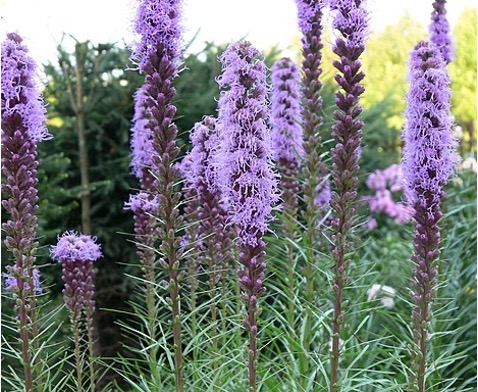
Dense Blazing Star
Liatris spicata
This gorgeous midsummer bloomer deserves a place in most any garden, so long as it’s not too dry; it might appreciate a drink during those occasional midsummer droughts. Consider pairing with another showstopper, purple coneflower. Very similar in appearance to prairie blazing star, Liatris spicata has even more flowers per head with smooth-pressed floral bracts, while the floral bracts of L. pycnostachya are clearly curved outward, or recurved.

Downy Wood Mint
Blephilia cilata
Does fine in sunshine as well as light shade and handles dry soils with aplomb. Downy Wood Mint is an early-season favorite of pollinators, not to mention certain gardeners, who delight in the pagoda-shaped blooms. The deer leave it alone, and it doesn’t take over. What more could you want?
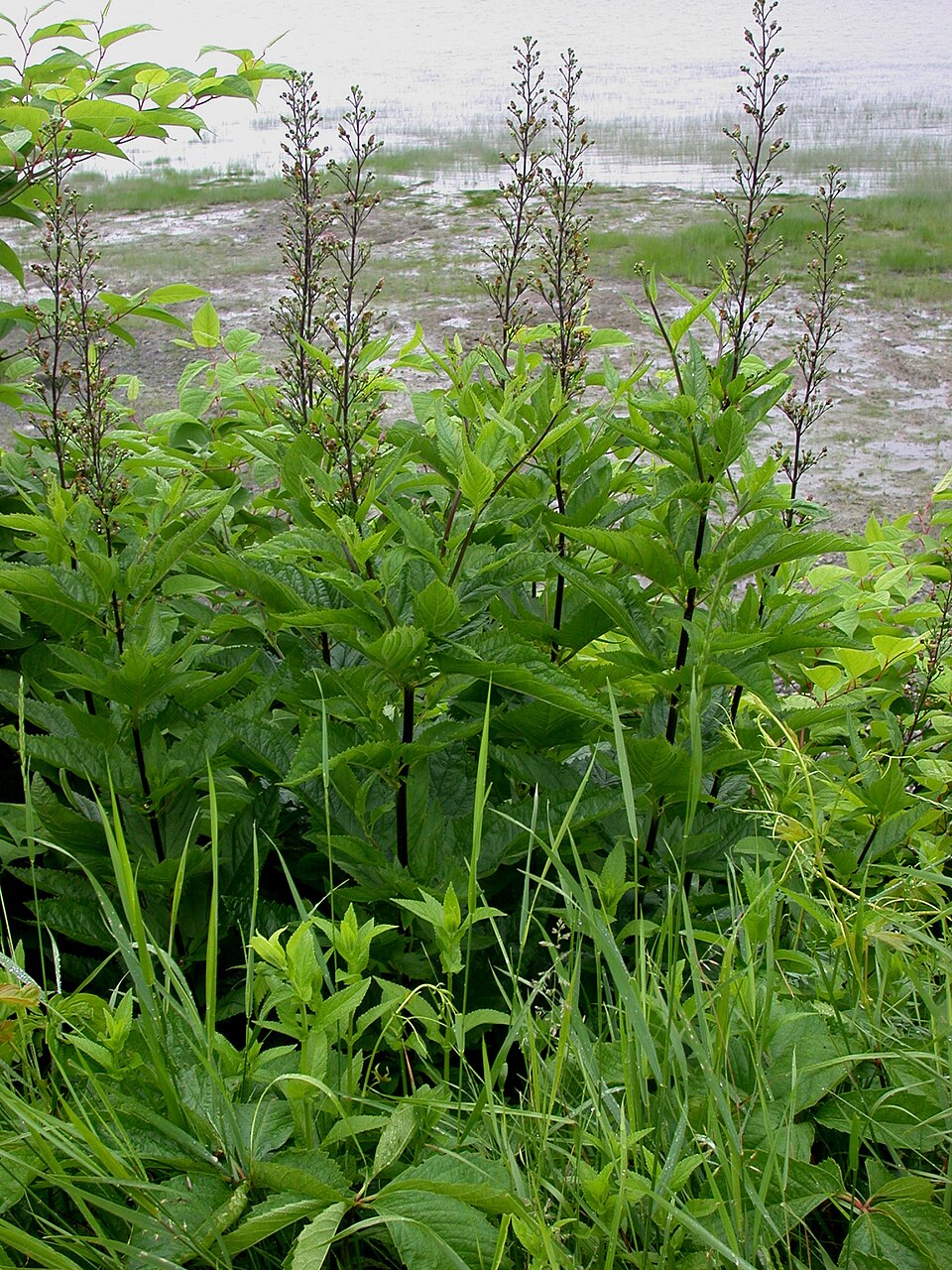
Early Figwort
Scrophularia lanceolata
Similar to its sibling late figwort, early figwort is a dynamite pollinator plant. It’s not classically showy, but if hummingbirds are at the top of your list, consider early figwort. Easy to grow in most conditions, the Xerces Society lists figworts among “the most prolific nectar producers in the plant world.” They are bushy enough to be part of a privacy planting and are especially alluring to pollinators when planted en masse. Just sayin’.
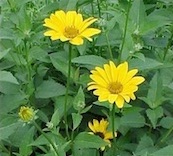
False Sunflower
Heliopsis helianthoides
Easy to grow and very pretty, false sunflower (aka early sunflower) loves sun and just about any soil or moisture condition, though it does appreciate a little extra dampness. It can form a focal point at the back of the garden and is beloved by pollinators and birds. Bonus! Beautiful sunflower-type flowers without sunflowers’ tendency to spread.
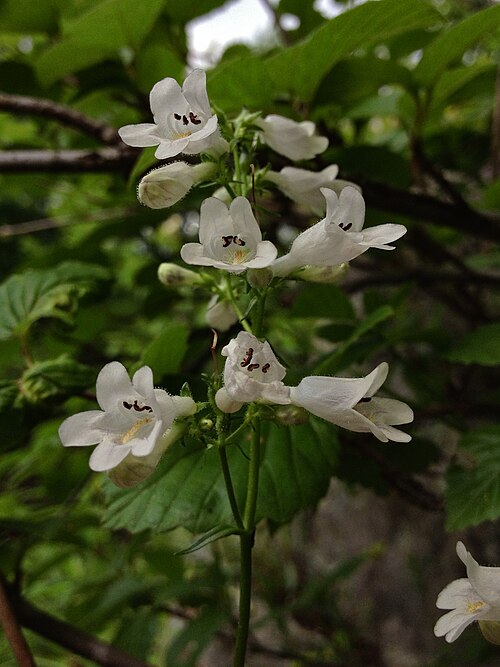
Foxglove Beardtongue
Penstemon digitalis
Extra-pretty early summer bloomer that likes most kinds of soil so long as it’s not too wet or too dry. Looks especially nice with Ohio spiderwort. Add some grasses and later-blooming forbs (like purple coneflower) to extend the season of interest.
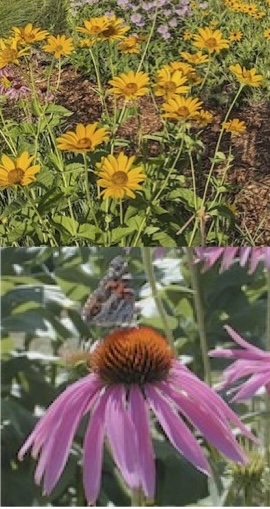
Garden Showstoppers
A great deal on fabulous plants
This summer, we have an abundance of two of the most garden-worthy native plants, and we thought we’d pass on the joy. Both false sunflower and purple coneflower love similar conditions, and it’s hard to decide which is the showiest. Now you don’t have to. We’re offering three each for $12 in our special Garden Showstoppers collection.
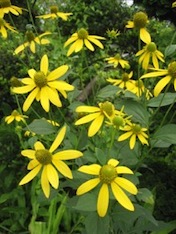
Golden Glow
Rudbeckia laciniata
OUT OF STOCK
Found in damp, partly shady places in the wild, this eye-catching plant (AKA green-headed coneflower, yellow coneflower) does fine in full sun with some moisture. The flowers float on the end of long, graceful stems. Golden glow can grow to statuesque heights–six feet, for example. It’s great for the back of the border or filling in a big spot with very little effort.
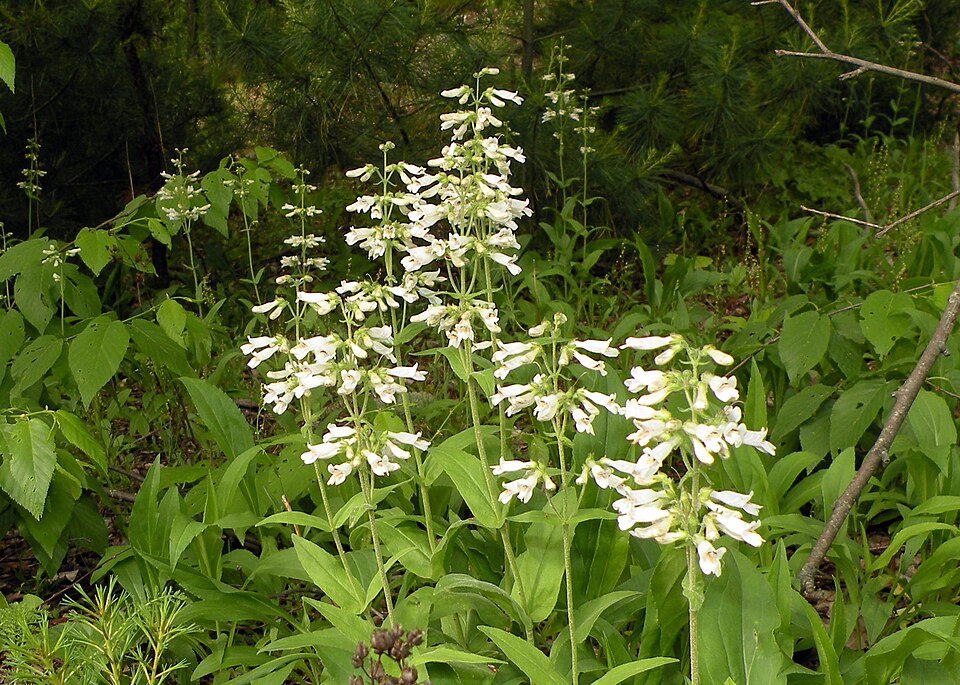
Hairy Beardtongue
Penstemon hirsutus
Don’t let the picture fool you. This lovely garden plant typically sports flowers of purpley lavender, but white variations are not uncommon. A bumblebee magnet, no matter the color. Bonus: It grows almost anywhere.
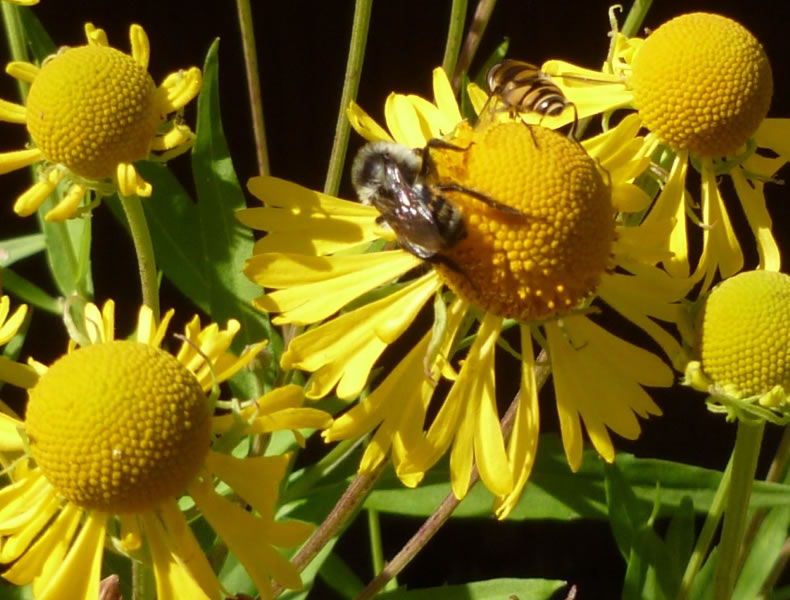
Helen’s Flower/Dogtooth Daisy
Helenium autumnale
This delightful plant loves full sun and all kinds of soils, doing best if they are damp. The charming flowers bloom en masse late in the season—maybe plant several together in a nice clump. The genus is thought to have been named by Linnaeus (the guy who began giving plants scientific names) for the world’s most beautiful woman, Helen of Troy. Legend has it that the flowers sprang up from the ground where her tears fell.
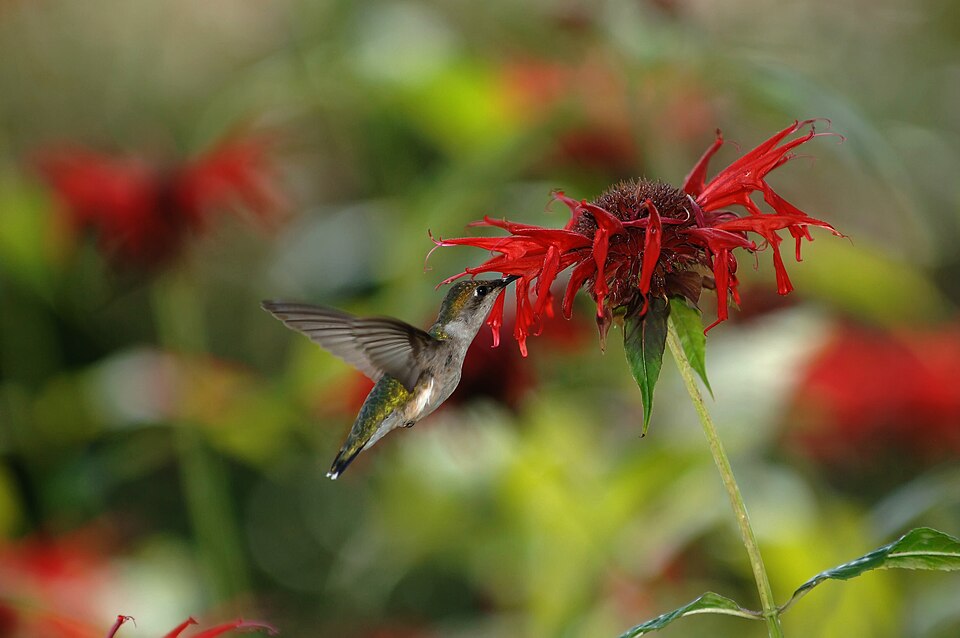
The Hummingbird Quartet
Lure hummingbirds and other native pollinators to your yard with these four great nectar plants at a great price: scarlet bee balm, wild columbine, and early and later figwort.
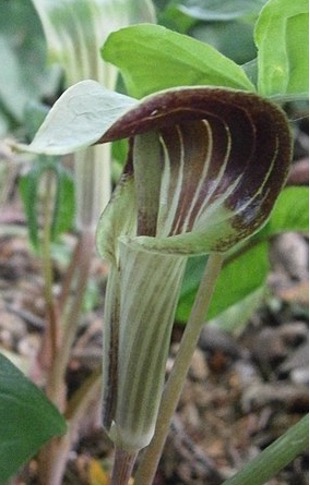
Jack-in-the-Pulpit Arisaema triphyllum
OUT OF STOCK
Who doesn’t love Jack-in-the-Pulpit? It’s one of those rare plants that delights the eye mainly though its clean lines and elegant structure. As for color, green and maroon are colors, plus the berries ripen to a brilliant scarlet. And guess what? It’s easy to grow, so long as you give it what it needs: a bit of shade and moisture.
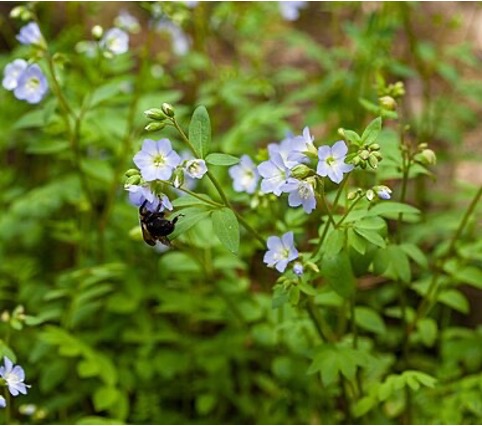
Jacob’s Ladder
Polmonium reptans
Delicate and delightful, Jacob’s ladder is a wonderful addition to the shade garden. It prefers conditions similar to a woodland, not too dry, with decent soil and some leafy mulch. Unlike many woodland spring bloomers, its foliage stays green throughout the summer.
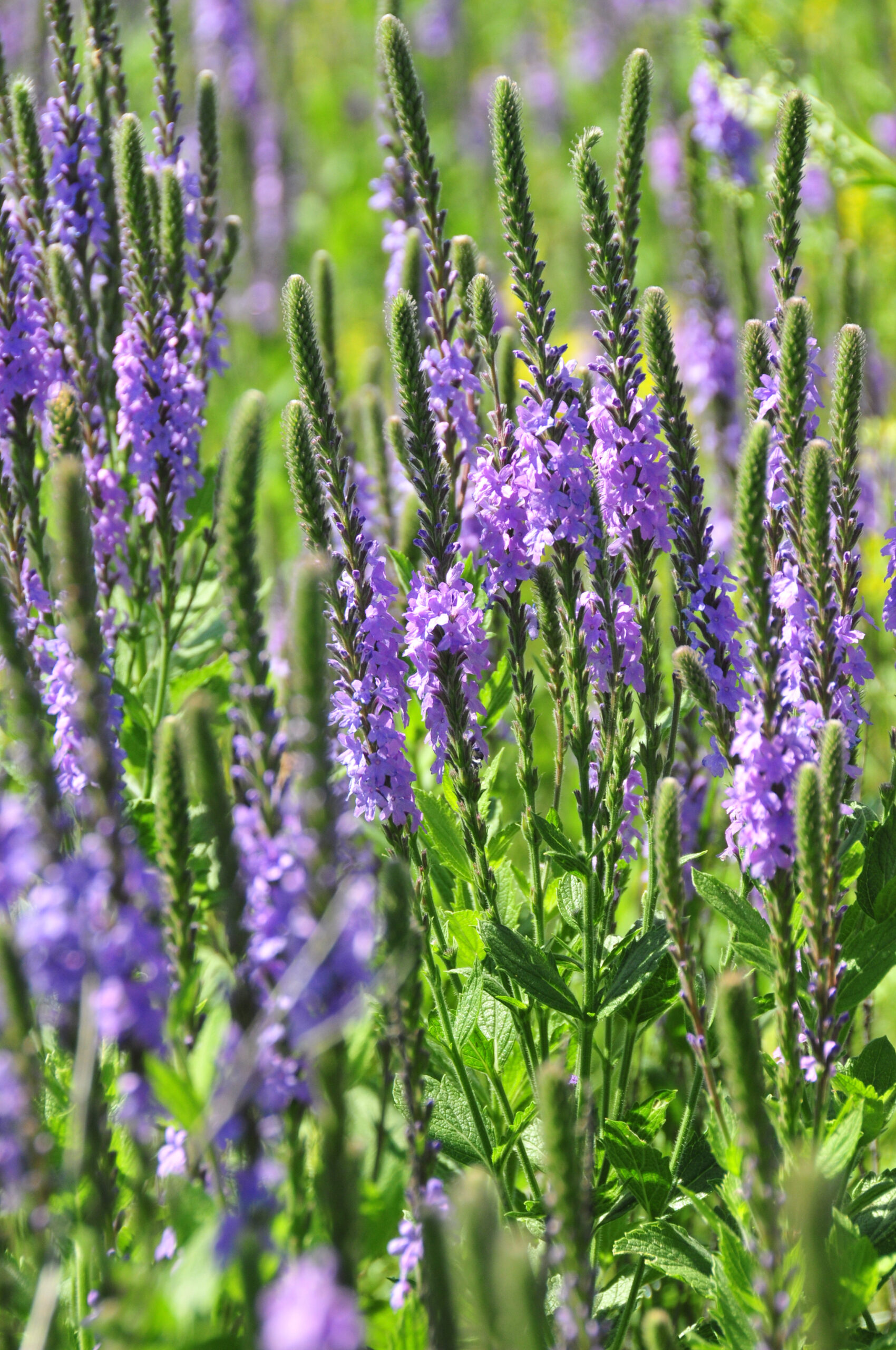
Hoary Vervain–NEW!
Verbena stricta
Hoary Vervain doesn’t seem to appear in gardens a much as its cousin Blue Vervain, which is unfortunate because it’s at least as pretty and is much more accommodating when it comes to the Keweenaw’s dry soils.
Hummers love its nectary flowers, and it’s a host plant for the beautiful Common Buckeye butterfly. Hoary Vervain reseeds but is not aggressive. In fact, it’s quite generous, blooming for weeks on end in July and into August.
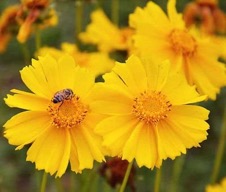
Lance-leaf Coreopsis Coreopsis lanceolata
Lance-leaf coreopsis is the hands-down workhorse of the summer garden, throwing an exuberant display of flowers when it seems like every other plant has thrown in the towel. Dead-head to keep the show going on, and on, and on. As you would expect, lance-leaf coreopsis is not fussy. It just likes lots of sun and not too much water.
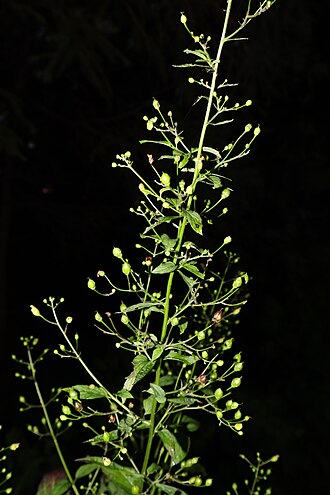
Late Figwort
Scrophularia marilandica
A top plant for hummingbirds, beneficial insects, and pollinators, thanks to the nectar that fills each of the BB-sized flowers. The plants themselves can get six feet tall and spead into a bushy clump. Maybe the best way to enjoy figworts is up close, where you can see all the happy insects. Or, stand back a few feet to make room for hummers. Plant with early figwort to extend the nectar season. Bonus: deer and rabbits will probably give it wide berth.
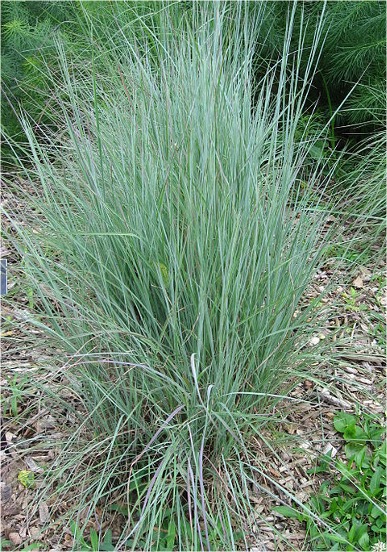
Little Bluestem
Schizachyrium scoparium
OUT OF STOCK
One of our most eye-catchiing ornamental grasses, it sports attractive blue-green foliage that turns a striking burgundy red in fall, with stems topped by pale, silvery seed heads. Like most native grasses, it appears impervious to deer.
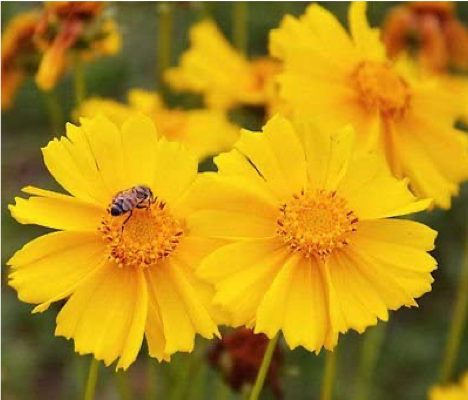
Mini-Gardens for Monarchs, Bees, and Other Bugs
The eight plants in each of our two mini-gardens for butterflies provide nectar and pollen over a long season. The gardens feature different types of milkweed, required to host monarch caterpillars: butterflyweed for dryer conditions and common milkweed for places where this racehorse has room to run.
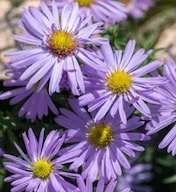
New England Aster Aster novae-angliae
Tons of gorgeous pink to purple blooms in the fall are a late-season godsend for butterflies and other pollinators. Good luck counting how many species you can find at one time nectaring on this aster. Can get tall and leggy, so if that bugs you, pinch back in early summer or put in the back of the border. Likes sun and partial shade and almost all soils, so long as they aren’t super dry.
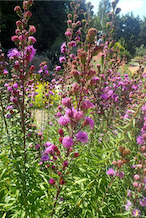
Northern Blazingstar Liatris scariosa
OUT OF STOCK
Northern Blazing Star adds vertical accent and a late summer bloom to the prairie garden. Due to the abundance of flowers, the plant may need to be staked. Northern Blazing Star is easily grown, tough and drought-tolerant, and happy in the worst places: open rocky woodlands, sand barrens, dry banks, and medium to dry prairies.
The foliage may need to be protected from browse until the plant is fully established. Pair with Purple Coneflower, Goldenrod, Spotted Bee Balm, Little Bluestem and Big Bluestem.
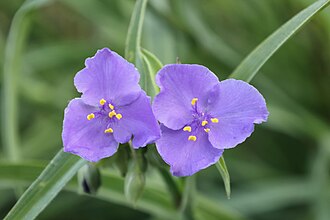
Ohio Spiderwort Tradescantia ohiensis
Lovely early summer bloomer. A spreader, but does play well with other natives of strong character. The hypnoic flowers close in the afternoon, so it looks best among grasses and other forbs.
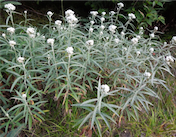
Pearly Everlasting
Anaphalis margaritacea
This underused plant thrives in sun and sandy soil with a bit of moisture. It’s a great filler, and the blossoms are charming. It is a host plant for caterpillars of the American lady butterfly, but it can handle being munched on once it is established. These two species have known each other for a long time.
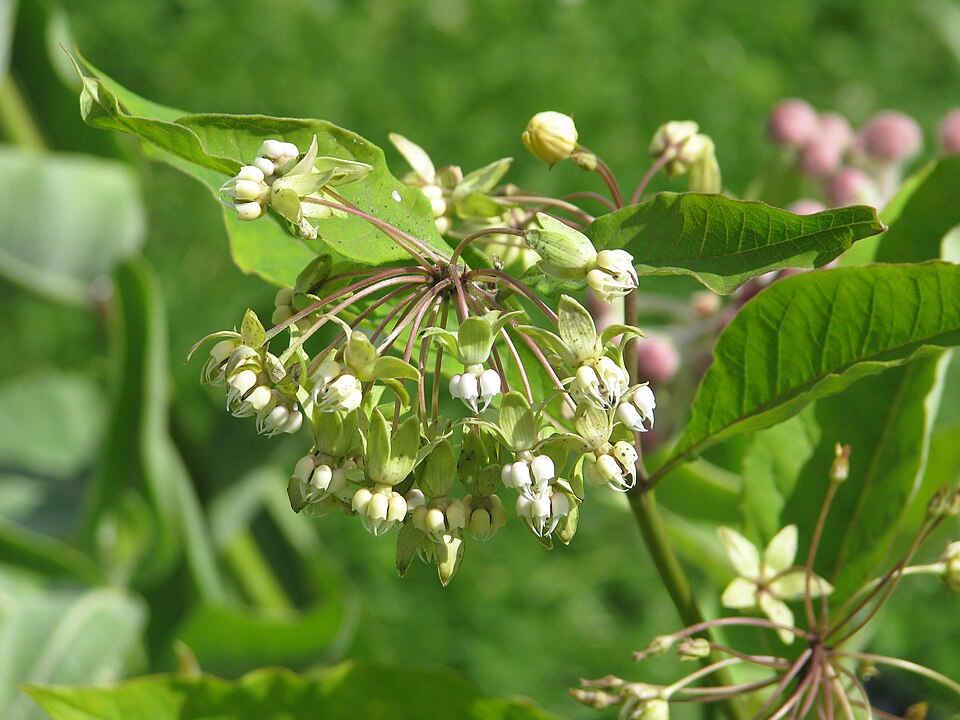
Poke Milkweed
Asclepias exaltata
The only shade-loving milkeed, poke milkeed is rare throughout its range, so if you want to see it, what better place than your own woodland garden? Like its cousins, it’s a host plant for monarchs. Plus, as a late bloomer, it would make a nice nectar pit stop for monarchs heading to Mexico for the winter.
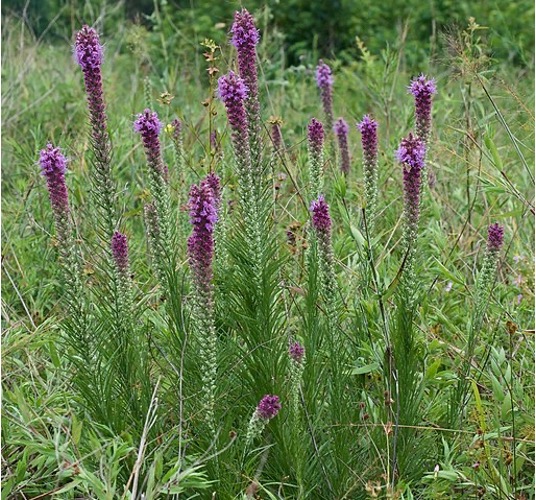
Prairie Blazing Star
Liatris pycnostachya
Fabulous garden plant that goes marvelously with purple coneflower. Deer love this just as much as we do, so if they are a problem in your yard, you will have to protect these guys. That said, it’s worth the time and trouble to grow this “What’s THAT?” flower. It likes damp conditions but does not require them. Good garden soil will do the trick.
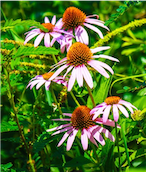
Purple Coneflower Echinacea purpurea
The gateway plant leading to a lifelong addiction to native gardening. With a handful of other natives (black-eyed Susan comes to mind), purple coneflower can lure even the most conventional gardener to consider transforming a corner of their yard into a wild paradise. It’s gorgeous, familiar, adaptable, and well-behaved. Not to mention easy to grow in average, well-drained soil in full sun to partial shade.
And yes, even though purple coneflower looks like it could have leapt off the pages of a conventional seed catalog, it is definitely loved by birds and pollinators—not just us humans.
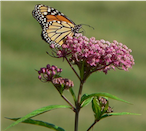
Red Milkweed
Asclepias incarnata
OUT OF STOCK
Also known as Swamp Milkweed or Rose Milkweed, Red Milkweed has a lovely fragrance and is a host for Monarch and Swallowtail butterflies. It’s flowers are less red than rose and are held above the plant, where you can watch pollinators of all stripes settling in for a banquet. Red Milkweed is happy in damp and will tolerate temporary flooding. But it is pretty adaptable; I’ve seen it growing in a hot, dry strawberry bed. However, don’t expect to be able to transplant it once it grows up. It has a taproot and would rather die than change its address.
Scarlet Bee Balm
Monarda didyma
Gorgeous wildflower which, like purple coneflower, has found its way into conventional landscapes. Irresistable to hummingbirds, Scarlet Bee Balm likes good garden soil, and if you put it in its happy place, you will be rewarded by a spectacular mid- to late summer display of both birds and blooms.
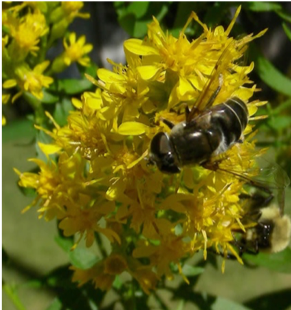
Showy Goldenrod
Solidago speciosa
A gold-medal plant for pollinators, Showy Goldenrod deserves to be planted a lot more than it is. This is one fantastic fall bloomer, flowering a little later than most goldenrods and thereby providing a late season nectar source for Monarch butterflies and other pollinators. It has a showy feathery plume on a red stem and looks good paired with Black-eyed Susan, Stiff Gentian, Blazing Stars, and all by its gorgeous self.
Showy Goldenrod tolerates a range of soils as long as there is good drainage. The plant can be grown in prairies, fields, thin rocky soil and on dry, open, sandy ground. Best in poorer soils and/or with competition, so it doesn’t overgrow.
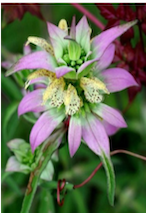
Spotted Bee Balm
Monarda punctata
OUT OF STOCK
Spotted Bee Balm, a pollinator magnet, has been designated as having special value to native bees according to the Pollinator Program of The Xerces Society for Invertebrate Conservation. Preferring drier conditions, Spotted Bee Balm is more drought tolerant than other monardas and readily self-seeds on open, sandy soils. This is a good thing, because you will want lots of this plant.
Spotted Bee Balm, also known as Dotted Horsemint and Dotted Mint, is aromatic and avoided by deer and rabbits. The plant is attractive when paired with butterfly weed and lead plant, or wherever it pops up.
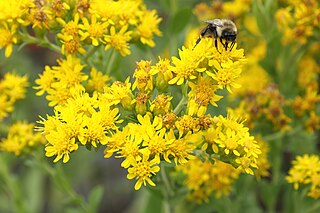
Stiff Goldenrod
Oligoneuron rigidum
A tough customer that nevertheless is not especially aggressive and is very forgiving when it comes to growing conditions. Like all goldenrods, it is beloved by pollinators, and its foliage has a gray-green cast that’s extra pretty.
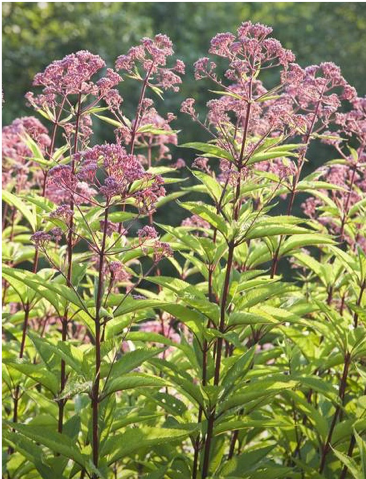
Sweet Joe Pye Weed
Eutrochium Purpureum
Unlike the familiar Joe Pye weed found in wet ditches, this species does fine in medium soil with moderate moisture, and it’s fine in the shade. Its statuesque (5-6 feet tall) flowers are not just gorgeous, they are butterfly magnets. And seed-eating birds gobble them up in the fall.
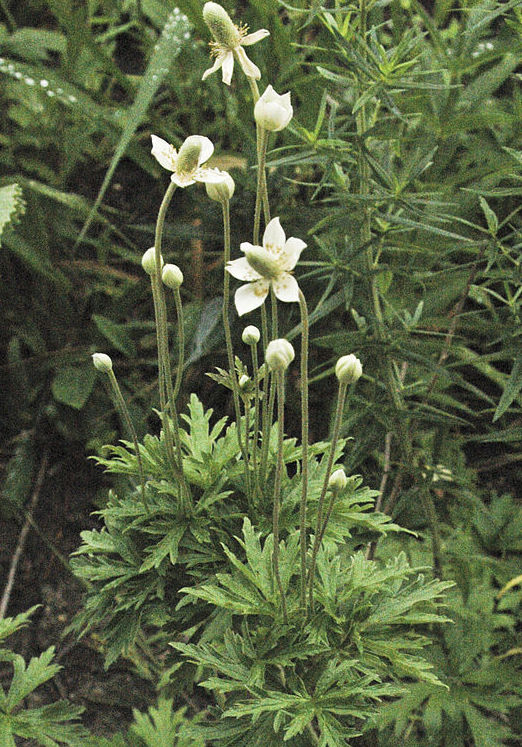
Thimbleweed
Anemone cylindrica
This pretty little creature looks like it belongs in a fairy glade, but it’s actually a tough customer, preferring sunny, dry open spaces and rocky soil. The greenish white flowers fruit into a greenish white elongated cluster that resembles a thimble.
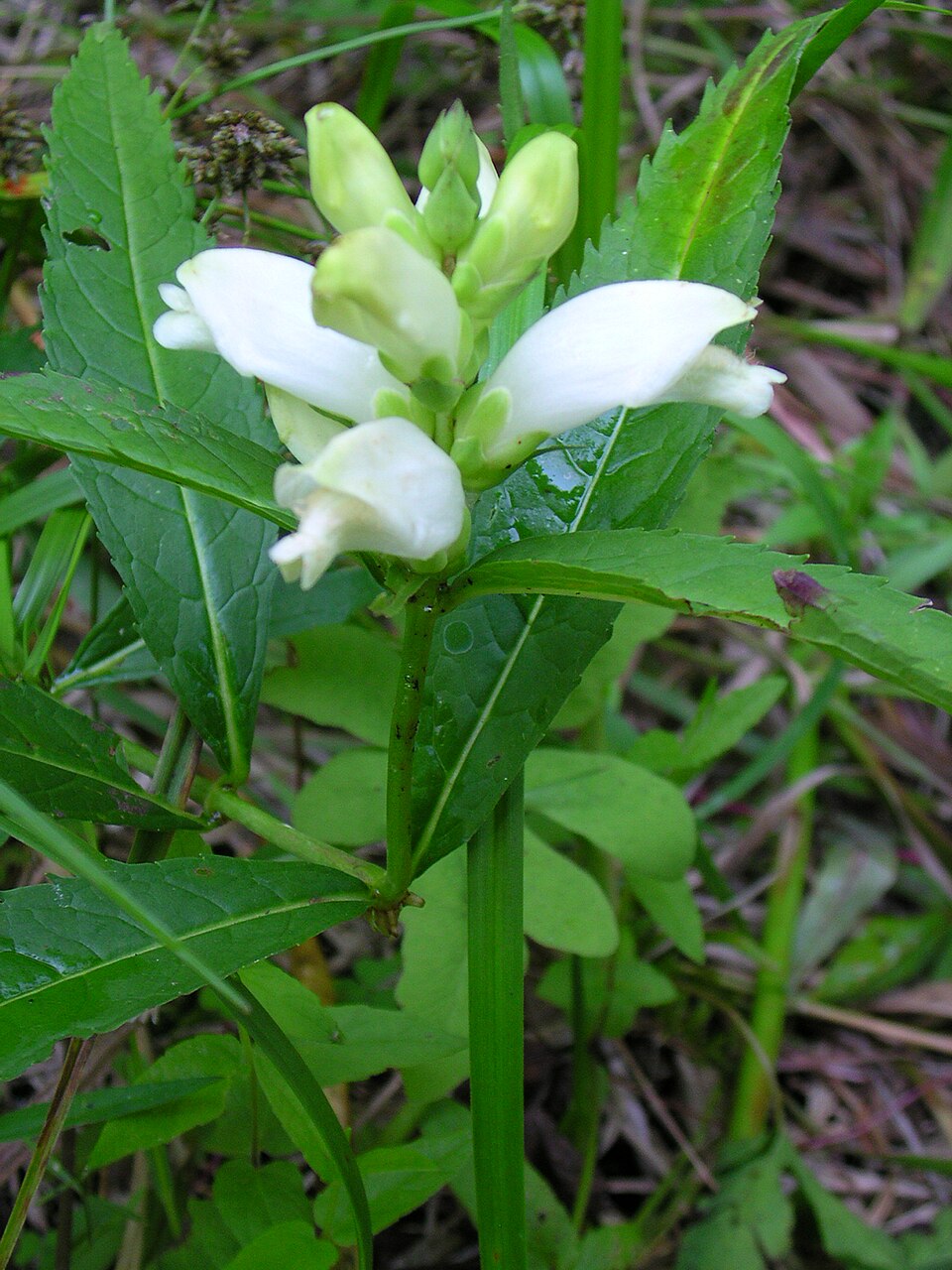
Turtlehead
Cleone glabra
A lovely wetland plant that’s happiest with damp feet, turtlehead also does double duty as a host plant for the gorgeous Baltimore checkerspot butterfly. Best in full sun, it will tolerate part sun. It’s especially attractive to bumblebees, which are among the few insects with the heft to pry open the blossoms.
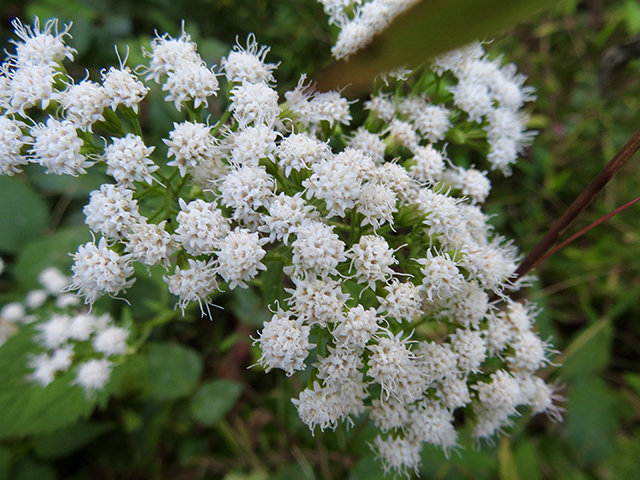
White Snakeroot
Ageratina altissima
A prolific polliator plant in shady and part-shady places, it provides a welcome late-season nectar source for many insects.
White snakeroot grows 2’ to 5’ tall and features delicate 3-6” wide, fluffy, bright white flower clusters from late summer until frost. The blooms are displayed atop its erect stems, set off against dark green 3”-6” long foliage.
Strongly resistant to deer and rabbits because of its bitter foliage, it’s also toxic to livestock and humans and shouldn’t be grown near pastures.
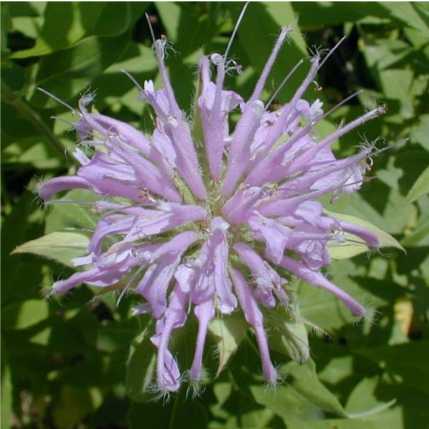
Wild Bergamot
Monarda fistulosa
A showy addition to the native garden, wild bergamot has a special advantage in being on deer’s do-not-eat list. The flowers are charming and a favorite of hummingbirds. The long bloom period provides a continuing source of food for many pollinators.
Fair warning: It is susceptible to mildew. Good air circulation helps, as does dividing large plants every two to three years. That said, a little mildew is a small price to pay for this treasure. There are even critters that eat mildew, so through that buggy lens it’s a good thing. Whatever! Throw caution to the wind, plant a slew of bergamot, and maybe install some pearly everlasting in front as a modesty skirt.